
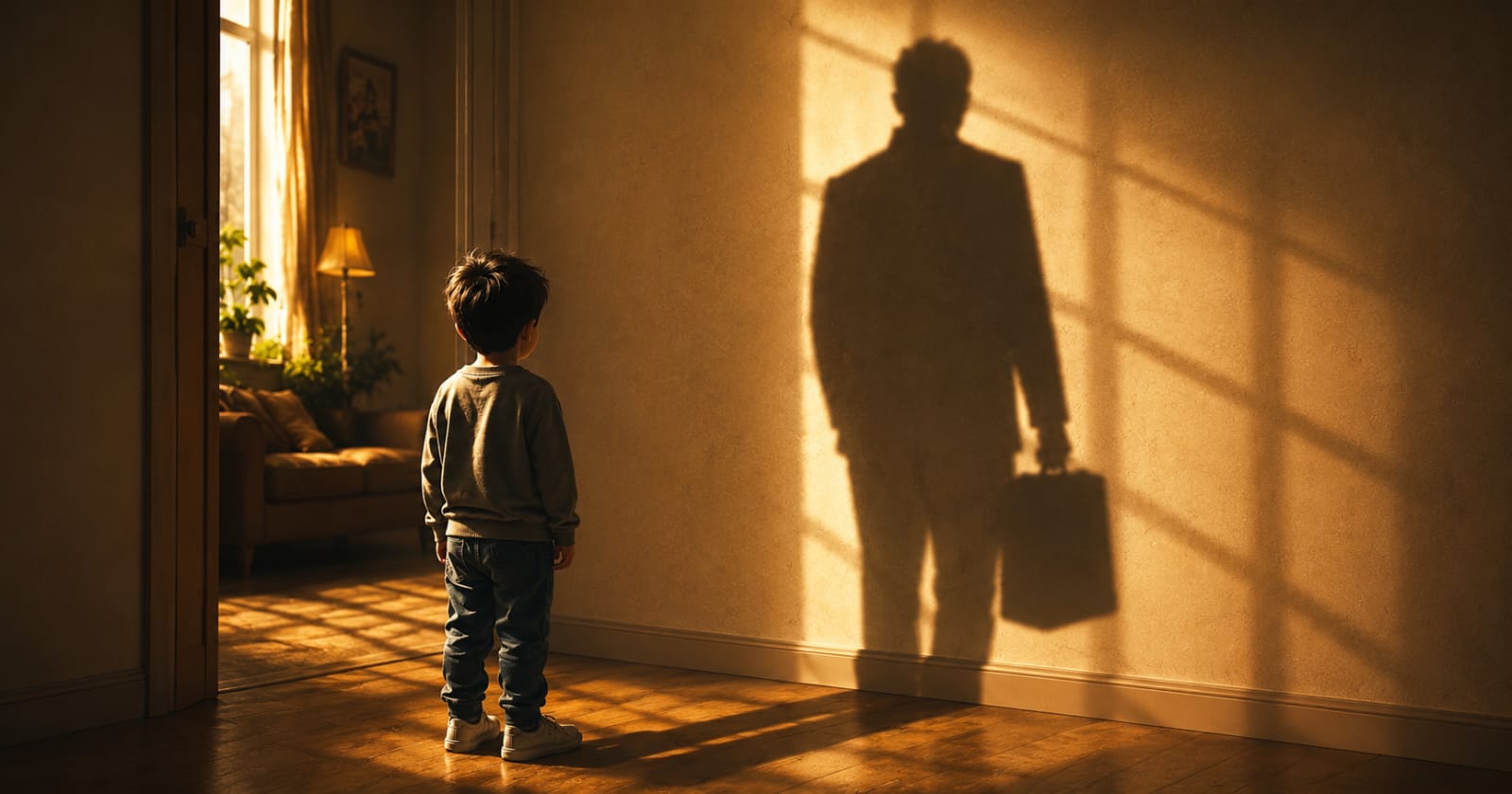
Some children inherit wealth. Some inherit traditions. Others inherit emotional responsibilities they were never meant to carry.
Not every son who struggles to set boundaries with his mother is a “mama’s boy” or “too attached.”Sometimes, he was simply never allowed to be just a son.
When Loneliness Finds No Place to Go
In many Asian households- and in countless families across cultures-love is abundant, sacrifice is expected, and emotions often go unspoken.
The husband works tirelessly. He provides for the family. He fulfills his responsibilities.
But emotionally, he remains distant.
Not always because he doesn’t care, but because he was never taught how to show care. Many men grow up believing that love is demonstrated through provision, not presence. Vulnerability feels unfamiliar. Emotional conversations feel uncomfortable. Silence becomes the language they inherit.
His wife, meanwhile, carries a different kind of labour.
She manages the home. She navigates expectations from in-laws. She remembers birthdays, mediates conflicts, anticipates everyone’s needs, and, in many cases, balances a career alongside it all.
She becomes the emotional center of the household.
Ironically, she has no one to lean on herself.
Her loneliness rarely looks dramatic…
Then a son is born-without realizing it, the foundation for the next generation is already being laid.
When a Child Becomes a Safe Place
He hugs her without hesitation.
Not by her husband. By her child.
And so, quietly and repeatedly, he absorbs a belief that feels natural because it is all he has ever known…
“Love means putting your own needs aside.”
When Love Starts Feeling Like Responsibility
As he grows older, something else quietly changes.
He anticipates disappointments, manages conflicts and learns to keep the peace.
From the outside, people describe him as mature.
What they often don’t see is the anxiety underneath.
The Impossible Choice
The problem is that he was never taught that love can exist alongside healthy boundaries.
The guilt grows quietly, the boundaries become harder to draw, and every choice feels like a betrayal to someone…
“There are no villains.”
How the Cycle Repeats
Healing Begins with Awareness
The answer isn’t to blame mothers or fathers or sons.
It’s to recognize the invisible roles we’ve normalized.
Children deserve to be loved without feeling responsible for anyone else’s emotional survival.
Mothers deserve emotional partnership that doesn’t depend on their children.
Fathers deserve the chance to learn emotional intimacy without shame.
Partners deserve relationships where love isn’t constantly negotiating with guilt.
And sons deserve something beautifully ordinary.
The freedom to be loved deeply…without ever having to become more than a son.
A Closing Thought
This article explores one of the most common family dynamics observed in many Asian households. It is not a reflection of every mother-son relationship, every father, or every Asian family. Many families share deep emotional closeness without crossing into emotional dependence too.
The intention here isn’t to assign blame, but to understand how unmet emotional needs can, at times, be unconsciously passed from one generation to the next. The goal is not to point fingers, but to recognize the pattern-because once we can name it, we have a chance to break it.
Some stories are inherited. Yours doesn’t have to end the same way. Reach out to Dee-Cognito.