
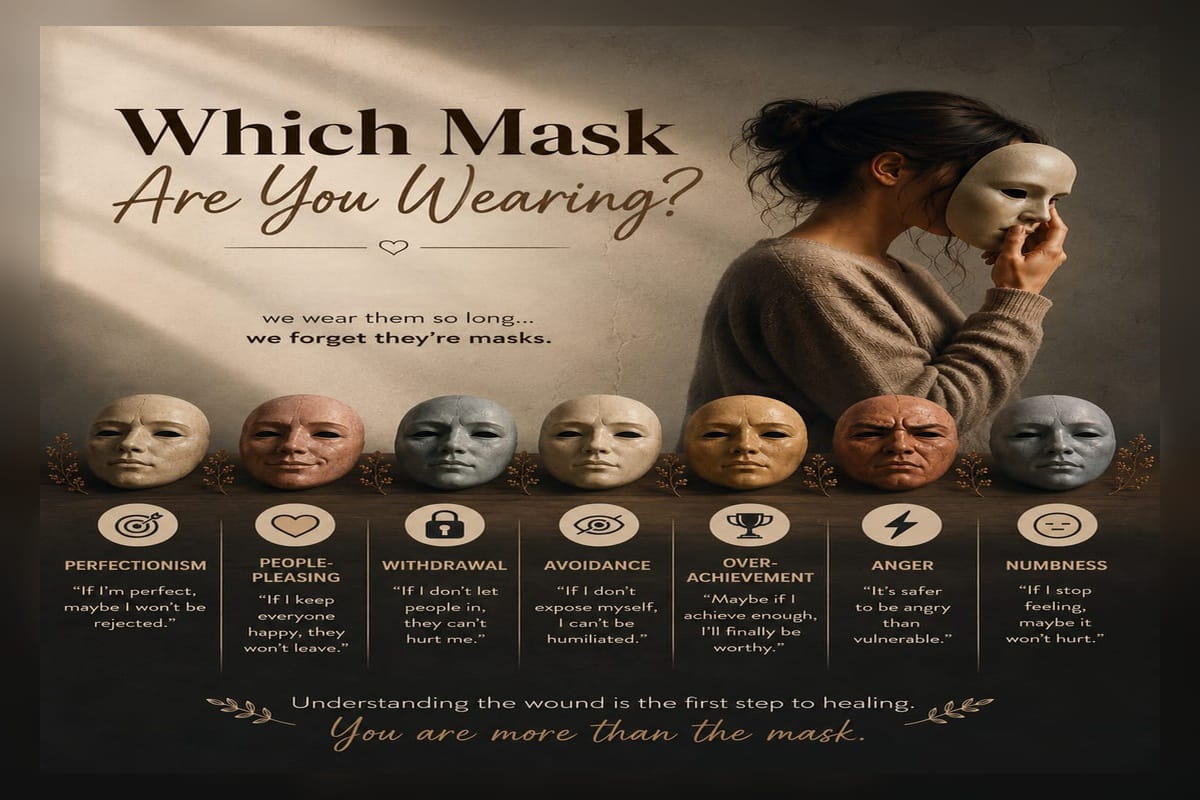
The Masks We Wear Over Emotional Pain
An emotional injury doesn’t necessarily end when the event ends. A rejection may be over, but the belief “I’m not enough” can remain. A betrayal may be in the past, but the fear of trusting someone again can follow us into new relationships.
What are Psychological Wounds?
Psychological Wounds are emotional injuries that alter the way we experience ourselves, other people, or the world around us.
They can arise from:
- Rejection
- Betrayal
- Neglect
- Abandonment
- Humiliation
- Chronic criticism
- Bullying
- Loss
- Repeated invalidation
- Feeling unseen, unheard, or unworthy
Let’s put it this way, the same experience doesn’t affect everyone in the same way. What becomes deeply wounding depends on the person, their circumstances, their support system, and how they interpreted the experience.
Why are these Wounds So Often Overlooked?
We readily recognize a broken bone because we can see that in the X-ray. But what about an emotional injury? Psychological pain doesn’t come with a visible scan. Just because we don’t see it, doesn’t really mean it doesn’t exist.
People may also minimize their own suffering:
“It wasn’t that bad.”
“Other people have been through worse.”
“I should be over it by now.”
“Why am I being so silly?”
And sometimes the people around them reinforce that silence.
The result is that someone can be carrying considerable emotional pain while appearing completely functional.
The Masks We Wear Over Emotional Pain
A person doesn’t always say, “I’m hurting.” Sometimes the wound speaks through behavior.
Perfectionism:
“If I do everything perfectly, perhaps nobody will have a reason to reject/criticise me.”
People-pleasing:
“If I keep everyone happy, perhaps they won’t leave me.”
Overachievement:
“If I become successful enough, perhaps I’ll finally feel worthy.”
Anger:
“It’s safer to push people away than to risk being hurt again.”
Withdrawal:
“If I don’t become emotionally close to anyone, nobody can disappoint me.”
Emotional numbness:
“If I stop feeling, perhaps the pain will stop too.”
Sometimes what looks like a personality trait is actually a survival strategy that once served a purpose.
Let’s also be specific here- not every perfectionist, angry person, introvert, or high achiever necessarily has an underlying psychological wound. These behaviours can have many causes.
How Wounds Enter Everyday Life
A person who was repeatedly criticized may struggle to accept compliments. Someone who experienced betrayal may constantly look for signs that something is wrong. Someone who experienced abandonment may become excessively anxious when a loved one becomes distant. Someone who was humiliated may avoid situations where they could be judged. Someone who grew up feeling unseen may constantly seek validation.
The fascinating question here is:
Are we responding to what is happening now, or to what happened then?
Sometimes the present situation is real. Sometimes an old wound is amplifying the meaning we give to it. And sometimes it is both.
How Psychological Wounds Affect Self-Worth
Repeated experiences can gradually become internal narratives:
“I was rejected” → “I am unlovable.”
“I made a mistake” → “I am a failure.”
“Someone betrayed me” → “People cannot be trusted.”
“I was criticized” → “Nothing I do will ever be good enough.”
The event becomes a story. And eventually, the story can become an identity.
What happened to us is not necessarily who we are. But when pain remains unexamined, we can mistake our wounds for our identity.
Healing: Taking Off the Mask
Healing is becoming conscious of what we have been carrying.
Healing can involve:
- Naming the wound rather than denying it.
- Recognizing the beliefs that grew from it.
- Developing compassion for the person we were when we were hurt.
- Learning healthier ways of protecting ourselves.
- Building relationships where safety and trust can develop.
- Challenging beliefs that no longer serve us.
- Setting boundaries.
- Allowing ourselves to receive support.
- Seeking professional help when the pain is persistent, overwhelming, or interfering with daily life.
And perhaps most importantly:
Healing does not mean pretending the wound never existed. It means the wound no longer has to dictate every decision.
Closing Note:
Perhaps healing begins when we no longer need to hide every wound behind a mask. Not because the pain was insignificant, and not because the past can be changed, but because we finally begin to understand what that pain has been trying to tell us.
We can acknowledge the rejection without making it our identity. We can remember the betrayal without believing everyone will betray us. We can recognize the criticism without continuing to speak to ourselves in the same cruel voice.
Our wounds may be part of our story, but they do not have to be the author of it.
Some wounds leave scars. Some leave lessons. And some, with time, compassion, and conscious healing, become places from which something stronger can grow.
Looking for a safe space to address your psychological wounds? Reach out to Dee-Cognito